
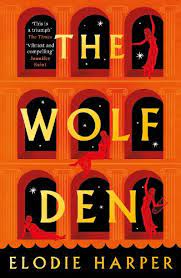
Amara was not born a slave. She was not born a prostitute. Yet these are the two words which now define her entire life. Of all her fellow prostitutes, only Dido understands how it feels to have fallen so far. Victoria, the favourite, has never known any different and she scorns Amara’s desire to escape. The others, too, think she is foolish to dream of freedom. They do not understand that Amara will do anything it takes to be free.
Even if what it takes is becoming the best prostitute she can possibly be. Even if what it takes is putting on a mask and playing a role for the rest of her life. Even if what it takes is closing off her heart and leaving everyone behind.
The thing that makes this book so engaging and so memorable is that it is written in a way that makes it fully believable. The historical setting provides a backdrop of accuracy whilst the ancient period chosen allows for a decent amount of poetic licence due to our limited understanding of the period.
Slaves are certainly a historical fact, as are freedmen, but the exact details of their lives are not well-documented. Pompeii is famous for its prostitution, but again the details are interpretation and guesswork. This gives just enough room for Harper to create her own structure and relationships within an already proven framework. The reason that this is so effective is that it makes Amara’s backstory so painfully believable.
Similarly, there is a historical precedence to support the backstories of Victoria, Britannica, and Dido. All Harper has done is to flesh out these shocking historical details into fully fledged characters that we can’t help but sympathise with.
One aspect of this book which particularly stood out to me is the huge variation in how different characters cope with their similar situations: fight, acceptance, giving up, making the best of a bad situation. The depth that this variety adds to the narrative is extraordinarily effective. It adds a haunting realism to the characters. This is particularly noticeable in Victoria as we can see how her origin story and her life of enslavement has affected her view of power and relationships.
 Escape to the Bookshelf
2 thoughts on “‘The Wolf Den’ by Elodie Harper”